What to wear in Greece in summer
July and August in Greece are very hot, and Athens can go above 40°C during heatwaves. So light colours and loose clothes made of linen or cotton are the most comfortable, because dark synthetic fabric holds the heat.
The Acropolis has almost no shade, which is why it’s best to go first thing in the morning and take plenty of water. The marble there has been polished smooth over time and is slippery even when it’s dry, so wear walking shoes with grip rather than flat sandals.
What to wear to monasteries in Greece
In monasteries and churches in Greece you have to cover your shoulders and knees. At Meteora women also need a skirt rather than trousers, but most monasteries there lend wraparound skirts at the entrance. So if you’re visiting on a hot day, keep light trousers or a long skirt and a top with sleeves in your daypack.
Ferries and island hopping
Most trips to Greece include ferries, and the deck is often windy. In July and August the meltemi, a strong north wind, blows across the Aegean, which can make crossings rough or delay them by hours.
- Light jacket: keeps you warm on deck, even on a sunny day.
- Daypack: holds everything you need for the crossing, because your main luggage usually stays in a pile by the ramp.
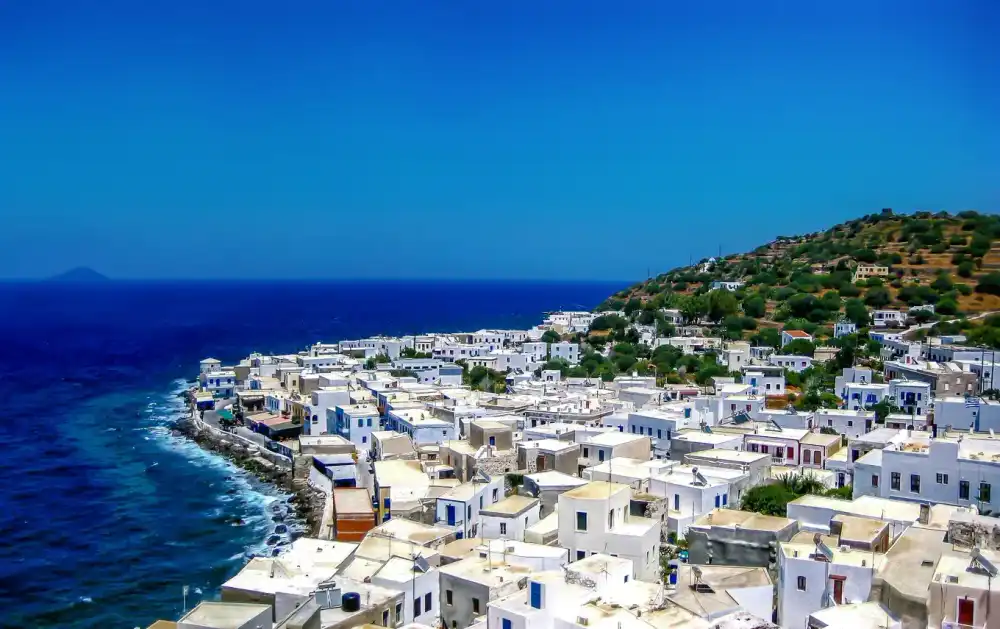
- Bag you can carry: island villages are mostly steps and narrow lanes, so a backpack or small case is easier than a large suitcase.
If you get seasick, the large, slower ferries are usually calmer than the fast catamarans.
Beaches and snorkelling in Greece
Many beaches, especially those you reach by boat or a dirt track, have no shade and nowhere to buy food or drinks. So bring water and food, and a long-sleeved top to swim in if you burn easily.
The water is very clear, which makes a snorkel mask worth packing even if you’re not a keen swimmer. Many coves are rocky and sea urchins live on the rocks in the shallows, so wear water shoes to get in.
What not to pack for Greece
- Jeans and heavy clothes: they’re too warm by mid-morning and take a long time to dry after a swim.
- Lots of smart clothes: island evenings are relaxed, so one smarter outfit is enough.